Clinically Speaking is a blog that will allow anyone to learn about Social Work, case presentations in psychotherapy, and the relationship of pop culture in psychology. Come one...come all!!!

Thursday, March 29, 2012

Addiction Treatment

We are all very aware of the various group therapy treatments, such as NA, AA, GA, SA. Pretty much any "A" you can find, you can become treated. There has been a lot of emphases on treating addictions with medication, as we had spoken about previously, most addictions are organic and since there is a physiological aspect to it from the addiction side, a way to treat has been through medication. Recently, there has been a big push in using Buprenorphine. Which has become the leader in treating: opiate, dependency, detoxification from heroin, oxycodone, hydrocodone, morphine, oxymorphone, fentanyl or other opioids. A big reason in using this specific drug is the low risk it has accompanied with becoming addictive. Furthermore, we know from TV/Movies that depending on the addiction, people do need "detox" themselves in order to "hit the restart button" on their body. Since I am therapist by profession, today's post will focus on the therapy aspects rather than the medical aspects of treatment. 

E-Therapy VS. Face-to-Face Therapy
In the 2011, American Journal of Drug and Alcohol Abuse, there was a study conducted that examined the uses of internet/electronic based therapy versus the conventional office/face-to-face therapy. The article explained that e-therapy would be a better modality than face-to-face therapy as reported that "in the United States, only 16% of people with an alcohol-abuse disorder had received treatment in 2001." As a side note, I personally believe this is not specific to substance abuse, but rather all mental health due to the unfortunate stigma that still remains. The results concluded that "We can conclude that the e-therapy program successfully attracted clients who were different from those who were represented in regular face-to-face alcohol treatment services. This indicates that e-therapy decreases the barriers to treatment facilities and enhances the accessibility. The e-therapy program reaches client groups that are still difficult to reach in regular face-to-face therapy. However, we saw that the e-therapy population changed over time. In 2005–2006, the e-therapy program really reached a new population of problem drinkers. Although the e-therapy program still did reach an important new group of clients in 2008–2009, this group showed more overlap with the traditional face-to-face group of clients: less employed clients and less first time treatment seekers.(Marloes G. Postel, M.Sc.1,2, Hein A. de Haan, M.D.1,2, Elke D. ter Huurne, M.Sc.1, Eni S. Becker, Ph.D.3, and Cor A. J. de Jong, M.D., Ph.D.2)

Thought that was pretty interesting...might be a topic for an upcoming post, the idea of e-therapy and its place.

Assesment Tools
There are many preventative measures that are used within the field of therapy and substance abuse, I can tell you when I see my patients I use the MSSI-SA. Which stands for Modified Simple Screening Instrument for Substance Abuse (MSSI-SA) Self-Administered Form. This is used primarily for settings that do not specialize in substance abuse treatment, yet it gives an idea if the patient is or can become at risk to substance abuse.

One more day...till Friday hang in!!
YES

Tuesday, March 27, 2012

Genetics, Chemical Imbalances and Addiction

Today we will examine the role genetics play in addiction. We are all aware that genetics do play a role when it comes to addictions. We know that if a parent or uncle or grandparent was an addict the risks of you becoming an addict are highly elevated. If you are interested in the statistics click the link to addictions and recovery here. It does a great job breaking it down for you. In my research for addictions week, I came across an interesting study that was reported on Psychcentral.com, that has shown a possible link in gender. Dr. Scott Stoltenberg, an assistant professor in the Psychology Department, found links between impulsivity and a rarely researched gene called NRXN3. The newly discovered connection, which was more prevalent among men than women in the study, may help explain certain inclinations toward alcohol or drug dependence.* I think that is pretty cool. Makes you wonder, if the beer companies know that little piece of info? 

I'd like to raise a question, the aforementioned is very interesting and well known and documented, but that is talking about organic addictions. Meaning chemical dependence to a specific drug or alcohol. Those addictions can be explained very easily, no? Body needs alcohol physically, or body needs heroine physically, I get that totally, but does your body chemically need to gamble? Does a person who is has a gambling addiction, is their body saying "I need to go to Vegas and play craps all night or I am going to go into withdrawal" or does someone who has an internet addiction, their body says "I have to watch one more Youtube video or check Facebook or I don't think I'll make it"? 

If you answered no to the gambling question I posed in the previous paragraph, well you would be wrong! Christine Hse of Medicaldaily.com wrote an article called, A Brain Chemical That May Cause Gambling Addiction, or Bankruptcy. She reported that "experts explained that although most people would only enter a two outcome gamble if there was more of a possibility to win more than they could lose, and people with lower levels of norepinephrine transporters and higher levels of norepinephrine showed reduced sensitivity to financial loss, and therefore were more prone to impaired decision making(i.e. gamblers)".  In simple terms gambling addiction may be caused by something actually chemical that is going on in the brain previous to starting to gamble.

If you answered no to the internet addiction question, sadly for you...you would be wrong again! Within the last year, researchers over at MIT and the University of Milan conducted a study that found reason that there is a chemical addiction to Facebook. The study concluded that "Statistical analysis of the psychophysiological data and pupil dilation indicates that the Facebook experience was significantly different from stress and relaxation on many linear and spectral indices of somatic activity. Moreover, the biological signals revealed that Facebook use can evoke a psychophysiological state characterized by high positive valence and high arousal."** Furthermore, Researchers at the Chinese Academy of Sciences in Wuhan published an atrticle called, Abnormal White Matter Integrity in Adolescents with Internet Addiction Disorder: A Tract-Based Spatial Statistics Study, in which the brains of Internet addicts may undergo chemical changes similar to those of alcoholics and other drug addicts.***

Really fascinating stuff...I personally was skeptical about gambling and internet addictions being a chemical imbalance, I blog corrected!

Happy "is winter back in the northeast?" Tuesday!
YES
***Internet Addiction

Monday, March 26, 2012

What is an addiction?


We often hear, "I am so addicted to this TV show, or this ice cream". We don't stop and think about what an addiction really is and how it happens. Lets first start with the definition of an Addict: A person who is addicted to a particular substance, typically an illegal drug. It is important to note that within the definition, the word addicted is used. As we have learned in the past, when a person is being Dx(Diagnoses/Diagnosed), according the DSM-TR-IV every Dx needs to fulfill criteria. The section on substance abuse is very large because it encompasses a lot of different substances which ranges from alcohol to both legal and illegal drugs. I believe and don't quote me on this, that the DSM-V will have sex addictions, internet addiction, and gambling addictions included in some capacity(we will talk about the differences later on in the week). According to the World Health Organization an estimated 76.3 million people struggle with alcohol use disorders contributing to 1.8 million deaths per year. Furthermore, the United Nations reported that around 185 million people globally over the age of 15 were consuming drugs by the end of the 20th century.

Typically, in the mental health field and substance abuse programs, the way we classify an addiction is different then how it is defined. We are able to distinguish the difference by assessing one major factor. If the particular substance or act does not interrupt a person from their daily living, we assume that it is not an addiction, rather a habit. Meaning if someone can go to work, school, attend to his familial and legal obligations of a person in society and is using a particular substance then we say its not an addiction(Btw-that's how the DSM starts the criteria)

But does that make any sense at all? Because I function, that means I am not an addict? This is exactly what a lot of addicts say to rationalize to themselves and others to dispel the notion that they have a serious problem. Now, there is a concept of a functional addict. However, maybe to the rest of the world they seem functional, but in no shape or form are a functional person. An interesting article by Sarah Allen Benton, M.S., L.M.H.C. entitled The High-Functioning Alcoholic, she details the what I had written about functioning abusers.

This is just a little taste of what we will talk about throughout the week.

Tomorrow: Addictions-Are they all chemical?

Don't make your Monday, Mundane!
YES

Addictions Week

This week on the blog will be all about addictions: Treatment, pathology around those who are plagued with addictions, the differences between the addictions, and an interview with a substance abuse therapist.

Stay tuned...should be a good week of knowledge...

YES

Wednesday, March 21, 2012

Resiliency: Nurture or Nature? Part Two

Did you miss me?

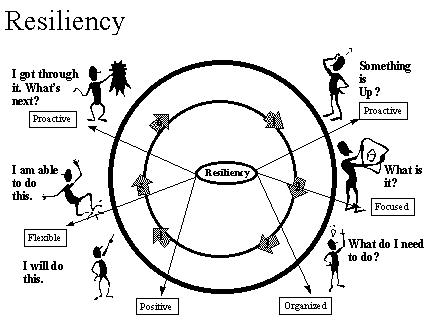
Sorry for being MIA, but we are back in action. In part one of this topic we saw in a longitudinal study that perhaps resiliency may very well have a lot to do with something innate rather than a learned behavior. In part two of this topic we will learn that, that thinking may not be so true.

Everything that children do, they learn it from somewhere, children or even adults for the most part don't make behaviors up. It is well documented that children really bring true meaning to "monkey see, monkey do" idea. In regards to mental health that remains true as well. Those of whom that are victims of domestic violence are at high risk to become batterers themselves. According to Strengthenoursisters.org,  "Boys who witness domestic violence are more likely to batter their female partners as adults than boys raised in nonviolent homes. Of the children who witness domestic abuse, 60% of the boys eventually become batterers." Again "monkey see, monkey do".

In regards to resiliency, I read a journal article by Dr. Steven J. Condly entitled, Resilience in Children: A Review of Literature with Implications For Education. The articles' main theme is about how to understand a child and how resiliency reflects how well they do in school. He writes referencing Norman Garmezy who was the leader in the field of resiliency, lists three factors that may lead to resiliency "(1)native intelligence and temperament...(2)family and degree of support...(3)external support from persons and institutions outside the individual and family." It appears that according to Condly and Garmezy resiliency may not only be innate but heavily on external and environmental factors that help foster resiliency.

Score: Nature-1, Nurture-1

Bottom line: It's a tie. It's a tie because much like everything in life there is not one way to do things to be successful there are specific ways that will facilitate an outcome, but you could get to that outcome in many ways.

Have a Wacky Wednesday!!
YES

Friday, March 16, 2012

Suicide rate surpass combat fatalities in Veterans.

Here is an article that could be an addendum to the posts related to our veterans and PTSD. This article talks about the unfortunate rise in suicides with our veterans coming home from Iraq and Afghanistan.(Hattip AH). Click for here the article Suicides, Mental Health Woes Soar Since Start of Iraq War, Study Finds.

Additionally, I added a three videos, Video One: Echos the article above, Video Two: A really interesting short film about a veteran and suicide. Video Three: Current PSA and suicides with our vets.

Video One:
Video Two:
Video Three:

Hope you have a good weekend!!!!
YES

Thursday, March 15, 2012

Resiliency: Nature or Nurture? Part One

I have always thought about when tough situations arise, are people able to deal them because of an innate trait or learned habit?  Hence the question: Resiliency Nature or Nuture? 

In a study done in 1955, by researchers Emmy Werner (University of California, Davis) and Ruth Smith (licensed psychologist, Kauai) began a longitudinal study that followed all of the children born on the island of Kauai during that year. The studied showed that "found that there were a percentage of children in their sample that faced very adverse conditions as they grew: perinatal stress, chronic poverty, parents who had not graduated from high school, and family environments that were engulfed in the chronic discord of parental alcoholism or mental illness. Many of these children developed serious problems of their own by age 10. However, to the researchers’ surprise, about one-third of the children in adverse situations did very well in their lives. Werner and Smith called them the "vulnerable, but invincible.

Werner and Smith continued the study with the participants until the age of 40 and it revealed that "even more of the high-risk children began to do better as they got older. Werner and Smith found that many of the cohort who experienced difficulties when they were teenagers – delinquencies, mental health problems, pregnancies – had become successful, functioning adults by the time they reached their third and fourth decades."**

It appeared from the research that these participants were not involved with any known psychotherapy to help them guide through these difficult times. 

Score: Nature-1, Nurture-0

Stay tuned for Part Two!

**That quote was from a article on Psychcentral.com. Click for full article called, Learning From Resilient Kids.

Have a splendid madness of a day!(Thursday)
YES