Clinically Speaking is a blog that will allow anyone to learn about Social Work, case presentations in psychotherapy, and the relationship of pop culture in psychology. Come one...come all!!!

Thursday, April 19, 2012

Blood Test: Predicting Mental Illness

Yesterday, it was reported by multiple different news and psychology sources(I used Reddit.com) that a study was published, that researchers have now been able to diagnose major depression in teens. The study was conducted not only to help predict and treat teens with depression, but also to make a distinction between depression and different subtypes of depression like major depressive d/o with anxiety. As reported, by Sciencecodex.com "Right now depression is treated with a blunt instrument," said Eva Redei, a professor of psychiatry and behavioral sciences at Northwestern University Feinberg School of Medicine and lead investigator of the study, published in Translational Psychiatry. It's like treating type 1 diabetes and type 2 diabetes exactly the same way. We need to do better for these kids." The article went on to explain how the study was conducted saying that "[Redei] discovered 11 [of the genetic] of the markers were able to differentiate between depressed and non-depressed adolescents...these 11 genes are probably the tip of the iceberg because depression is a complex illness, but it's an entree into a much bigger phenomenon that has to be explored. It clearly indicates we can diagnose from blood and create a blood diagnosis test for depression." 

Science and research are kicking proverbial butt right now!!! Which made me do my own research, so are we researching other mental illnesses that could be predicted by a blood test? You got that right!

In 2008, Dr. Alexander Niculescu at Indiana University School of Medicene conducted a study that have concluded that there are 10 genes that can be detected that were able to asses a patient for Bipolar Disorder. He said "Having an objective for disease state, disease severity, and especially to measure response to treatment, would be a big step forward." The article went on to say that Dr. Niculescu is working on other genetic markers to test anxiety, stress and hallucinations in patients with schizophrenia.*
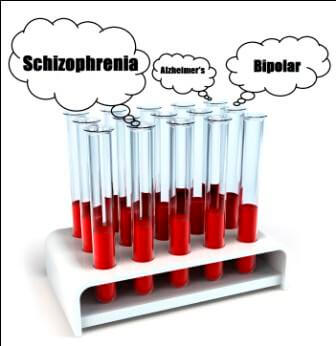
In January 2011, Singularityhub.com reported on an article called, Blood Test to Diagnose Schizophrenia, Other Brain Disorders On The Horizon, that said "Psynova-Neurotech and Rules Based Medicene(RBM) have developed VeriPsych, the first blood test for the disorder. To produce a sensitive and specific assay, scientists obtained blood samples from a large sample of both schizophrenic patients and healthy controls. Out of the 181 candidate bio-markers tested, 51 presented blood serum concentrations that were significantly correlated with the schizophrenia diagnosis. Using these 51 proteins as bio-markers, the VeriPsych test has an accuracy of 83%, which is remarkably close to the accuracy of the psychiatric interview."

I was just beat up real bad by science and research, but I enjoyed the smackdown! This should really give a lot more firepower for researchers at institutions who do research and that have problems getting funding at universities.

That was fun right?
Happy Thursday!
YES

Some good links...

I'll post a real post later. Here are some good links to hold you over:

Enjoy!
Post one of the day!
YES

Monday, April 16, 2012

Officials, Celebrities, Athletes are human too!

Unless you have been living under rock for the past few days you are aware of the recent news that secret service personnel were involved with prostitutes in a hotel. In Colombia, prostitution is legal and they were not in direct detail for guarding the president.

Why is this news? Furthermore, Why do we care?   

Celebrities and Athletes alike get divorced, and say stupid things. In sports, it happens on weekly basis(i.e. Michael Vick, Tiger Woods, Ozzie Guillen). 

So I ask again, why do we care?

Since this is an election year, candidates love to make personal attacks on each other. If someone is a good president, or accountant, or therapist; why do I care what they do in their personal life? It's just that, personal.

I think sometimes we look to these individuals as role models for ourselves and our children. Truthfully, they could be looked at as professional role models, but not as personal role models. Conversely, Tim Tebow and Jeremy Lin prove this theory wrong and maybe the reason why people are still wrapped up in Tebow mania and Linsanity. Public figures who practice what they preach. 

On a more psychological aspect, some of us may live vicariously through these individuals. Interestingly, in the Journal of Experimental Social Psychology, there is an article written called Vicarious Goal Satiation. The article supports the notion that when people observe others completing a task successfully they are more willing to complete that task themselves successfully. Could it be we think like this? Could be the reason we say "there life is great, I want that, and could have that too". We may idealize and/or become envious of what they have accomplished and say to ourselves " If I had what they had, it would perfect.  Knowing what these people are doing/talking/eating/watching/reading, evolutionary psychologists agree; it allows society determine who is trustworthy.

Bottom line: We have no idea what goes on with the Officials, Celebrities, Athletes behind close doors. It may appear that there life is a lot better, but it may not be all that great(but it may...)

Top of the week to you!
Cheers,
YES

Thursday, April 12, 2012

Trayvon Martin, George Zimmerman and Psychology!

In general here on CliniciallySpeaking, while we talk and engage about trending topics whether it be in politics, sports, pop culture, and tech that relate to mental health, rarely we talk about controversial topics. However the Trayvon Martin/George Zimmerman story has captivated the country both good and bad. I'd like to stay away from right/wrong and focus on what the psychological preconceived notions/implications that this story has on the country.
As reported by Chris Sweeney, on his blog on Trayvon Martin Killing and New Psychological Study On Gun Perception Whip Media Into Frenzy, shortly after the shooting, "psychology professors at Notre Dame and Purdue University announced a study showing that a person carrying a gun is more likely to "see guns in the hands of others". The study, slated for publication in the Journal of Experimental Psychology: Perception and Performance, gave people a toy gun or a foam ball and then flashed pictures of people on a computer screen. Participants were asked to determine if the people in the pictures were a holding a toy gun or something else, like a cell phone. When the study participants were holding a toy gun, they were more likely to say the people in the picture were also holding a gun." When I read the opening line of the findings in that experiment, Does that give any justification for the actions of George Zimmerman?Something to think about...


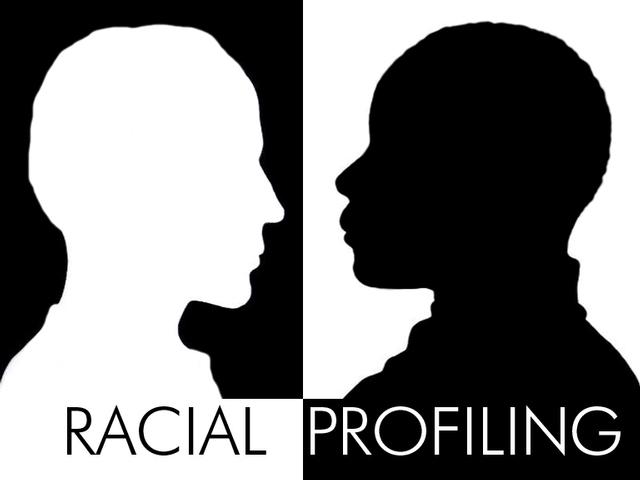
In the world of psychology there is a terminology called Cognitive Bias and Confirmation Bias. In this case one could argue that this is going on in the aftermath and during the shooting. George Zimmerman is a racist(Cognitive Bias-Media, the Martin family and supporters), or Trayvin Martin was involved with gang-related activities(Confirmation Bias-George Zimmerman and supporters)To someone who lives no where near the shooting and does not know anything about these two people will now conjure cognitive bias as well as confirmation biased based on almost no facts about either person involved.
Interestingly, Thomas J. Leeper Ph. D., reported on his blog, that there is a fascinating study that “recently shown that we can reduce our prejudices by consciously resisting our subconscious inclinations through “thinking safe”(rather than “thinking quick”)before judging whether an object associated with a black or white face is a gun. If Zimmerman was predisposed to see criminality in Martin’s presence in the neighborhood that night, it is unlikely that he would been thinking “safe”. Motivated reasoning and subconscious prejudice can be a powerful combination and it is possible they played a role here”.  Could this have preventative a death? Again, something to think about…


In regards to eye witness in this case and any case are pretty much is useless. Eye witness testimony is relied heavily on memory.   Therefore, a good majority of what the eye witnesses have said and will say might not hold a lot of water. Finally, something to think about...


It appears that this case will be on the front pages of our newspapers, media outlets and blogs(guilty as charged) for months to come, whatever the outcome I hope there is closure from whomever wants and needs it. There are more psychological aspects to this case and many more will probably unfold as more information is divulged.  If you plan to track the story heavily please keep an open mind and allow yourself to think and analyze for yourself.


Additionally, here are some links:
*Cognitive Biases Manifest in Trayvon Martin Case
Trayvon Martin's Psychological Killer: Why We See Guns That Aren't There?
Happy Thursday!
YES

Thursday, April 5, 2012

The Psychology of Rubbernecking

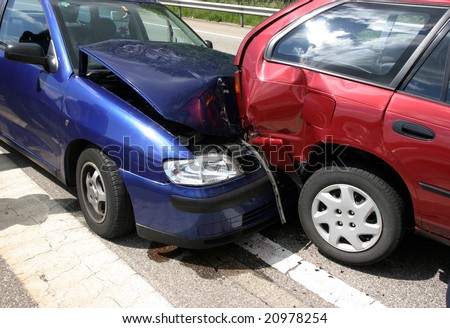
Last night at around 11pm, I heard from my apartment a loud boom and then a car horn. I said to my wife, that was a car accident, about 5 minutes later, sirens and flashing lights were seen. My interest immediately heighten to, A-see if I was right about there being an accident, and B-what did it look like. As I went out in my sweatpants, I was not the only one that was interested in the carnage. Which got me thinking, Why do we as people like seeing car accidents, plane crashes, crippling sports injuries, or even as harmless as America's Funniest Videos when a guy is hit in the groin by his 2-year old. What is it about that, that we enjoy? There must be some psychological reason that we enjoy rubbernecking....to the blog cave bloggers!


This is not about the PTSD or effects of the people involved, but the bystanders who cannot pull their eyes away from a person being pulled from the wreckage. I cannot believe we are a society that thrives on other people's pain. But are we? We all enjoy the big hit in football(legal that is). Matt Hardigree wrote an article for Jalopnik.com on Why are we so captivated by car crashes, "According to Roland Maiuro, a professor of psychiatry at the University of Washington, we tend to look at car accidents because "The accident provides a close encounter without yourself being directly involved being put at risk." It is more about the risk involved rather than the actual event that took place. Furthermore, I have read and spoken to other mental health professionals is the aspect of the illusion of control. For instance, to say that "that person got into a car accident because they were speeding, I don't speed therefore that wont happen to me", which is clearly flawed thinking.

When it comes to sports, and the NFL in particular, that is part of the reason we all watch, for the high impact hits/violence. Only recently, has the NFL started to now reconfigure "legal" and "illegal" hits. In my research, it has come to the attention that we are a society that enjoys risky and violent behavior. It is well documented that football players very often are using the psychological scapegoat of Displacement. Displacement is taking unacceptable thoughts or actions and utilizing them in a social acceptable forum. Meaning, football players are aggressive people by nature, what they do is harness that aggression and use it to play an aggressive based sport.

Finally, in regards to America's Funniest Videos, we have all watched and laughed. Are those videos risky or violent in nature? One step further, who are the forefathers of physical comedy? 3 guys known as Mo, Larry, and Curly. Classic physical comedians, do we say what they do is risky and violent? University of Colorado psychologists A. Peter McGraw and Caleb Warren uses the Three Stooges as an example of benign immorality: "We laugh when Moe hits Larry because we know that Larry's not really being hurt. It's a violation of social norms. You don't hit people, especially a friend. But it's okay because it's not real...comedy comes from violating society's rules, but only if the observer feels those rules have been violated in a safe way."*  

Is that consistent with car accidents and sports? Yes! When it comes to car accidents I think a lot has to do with making sure the people involved are OK, once you can see that, it boils down to looking at what happened abstractly, risky/violent goggles are taken off. In sports, our risky/violent goggles are taken off  because its entertainment, when someone gets a good hit, we immediately cringe, but when he gets up we clap. Like sports, physical comedy we know inherently that harm is not done maliciously our risky/violent goggles are taken off.  

Any way you slice it, they each have some level of risk/violent whether fake or real, still remains!


Happy Opening Day! Let's Go Mets!!!
YES

Monday, April 2, 2012

"It is I, The Messiah": Psychiatric illness or Divine Inspiration?

"I am Jesus!", "No I am Jesus" , "Well you can both can be Jesus, because I am the only Moses, that's right no beard!" You can walk around the streets of New York, Miami, LA, Vatican City, Rome and will undoubtedly find A Jesus, or A Moses,  or A Mary, or even an Allah. Most of us laugh, and walk by, some even give a stare and we ask ourselves: Are the people who claim and proclaim to be the Messiah, do they actually believe it or are they simply suffering from psychiatric illness??

As I like to do over the weekend besides sleeping and eating, I like to catch up on reading from the only magazine I subscribe to, WIRED. This magazine is primarily about gadgets, electronics, nuances of the internet, back stories of people of the web and tech industries. They often have amazing articles on random interesting topics in pop-culture. In the March 2012 issue, Chris Nashawaty wrote an article, The Jerusalem Syndrome: Why Some Religious Tourists Believe They Are the Messiah. The article chronicles a man named "Ronald Hodge" and his demise from working and being married to unemployed, divorced, in Jerusalem and suddenly believing he is Jesus Christ, oh yea and then being hospitalized psychiatricly.  Dr. Peseach Lichtenberg, is the head of the psychiatric department at the Herzog Hospital in Jerusalem and has been working with the patients who are Dx as having the Jerusalem Syndrome for over 20 years. The Jerusalem Syndrome is whereby a person who seems previously balanced and devoid of any signs of psychopathology becomes preoccupied by the particular religion they associate with and develop psychotic features after arriving in Jerusalem. That is a very important line "person who seems previously balanced and devoid of any signs of psychopathology" because that would lead someone to believe that these types of people become psychotic due their surroundings of holiness(ie Jerusalem) and not for any another reason. Dr. Lichtenberg reported that "In two decades at Herzog, the number of false prophets and self-appointed redeemers he has treated is in the low three figures". He goes on to say "that during times of uncertainty and conflict (not infrequent in Israel), admissions to his ward spike". According to Kalian & Witztum, 1998 it has been noted that about 18% of the tourists who need psychiatric hospitalization in Jerusalem display significant features of the syndrome. 

In the Journal of Mental Health, Religion and Culture; Kalian, Catinari, Heresco-Levi,& Witztum(2008) wrote an article called, Spiritual Starvation’’ in a Holy Space—a Form of "Jerusalem Syndrome". It gave case examples of the Jerusalem Syndrome. They wrote that "Not surprisingly, religious beliefs are commonly encountered in psychiatric practice and, like any other type of belief, span a continuum from normal to delusional. However, religious beliefs can present a unique challenge to the clinician attempting to identify where along this spectrum a particular belief lies (or delusion sets in)".

Which brings us to my original question: Psychiatric Illness or Divine Inspiration? Dr. Yoram Bilu, an Israeli psychological anthropologist at the University of Chicago Divinity School said that "It’s just the trigger...the majority of people who suffer from Jerusalem syndrome have some psychiatric history before they get here". Meaning they aren't completely balanced and devoid as mentioned earlier, but they might not be having full blown psychosis until there is some trigger, whether it be a life altering change (i.e. death, divorce, unemployment) but the mental illness stays dormant until a trigger occurs. When it comes to the Jerusalem syndrome, the trigger is religion/environmental based. 

So the answer is both! Religion to a certain extent relies on faith and belief without having concrete proof. To say that someone has a psychiatric illness because they believe, obviously would be ludicrous. Conversely, if a person had this enlightenment at a critical time in their life which led to psychosis or delusions or hallucinations. I think it would be a safe bet saying that the "divine inspiration" was a rationalization and the "trigger" for a much bigger problem.

Interesting stuff!
Happy Monday!
YES

Addiction week comes to a close...

I hope you all enjoyed the posts on addictions, and you get a small taste of what is going on in the world of treatment and different addictions that people are facing in 2012. I must apologize, I had hoped to interview some therapists and substance abuse counselors in the field, but the professionals I had been contacting were unable to be interviewed for the blog. When they do become available I will interview them and post them ASAP.

If you or someone you know think they may have a problem. Click here for the MSSI-SA, its quick and easy. Click for information on AA, NA, SA, GA.

Happy 1st post of Monday!
YES