Clinically Speaking is a blog that will allow anyone to learn about Social Work, case presentations in psychotherapy, and the relationship of pop culture in psychology. Come one...come all!!!

Monday, February 27, 2012

Class is in session...


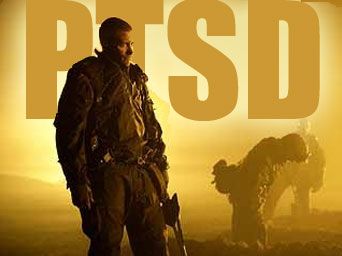
Today's post will be a precursor to upcoming posts. Today's discussion: Post Traumatic Stress Disorder or PTSD. This disorder is under the scope of what the DSM-IV-TR label's as an Anxiety Disorder.  Within the next couple of days the blog will talk about PTSD and our veterans. I thought it would be a good idea to get some background on the disorder. Please click see the full list of Anxiety Disorders and definitions that are in accordance with the DSM-IV-TR: Anxiety Disorders from the Cleveland Clinic.

Pencil's ready? Begin!

Post Traumatic Stress Disorder(PTSD): 
The person has been exposed to a traumatic event in which both of the following were present: 
1) A person experienced, witnessed, or was confronted with an event that involved actual or threatened death or serious injury or a threat to the physical integrity of others.
2) A person's response involved intense fear, helplessness, or horror.
The traumatic event is persistently re-experienced in at least one of the following ways:
1) Recurrent and intrusive distressing recollections of the event, including images, thoughts, or perceptions.
2) Recurrent distressing dreams of the event.
3) Acting or feeling as if the traumatic event were recurring, including a sense of reliving the experience, illusions, hallucinations, and flashback episodes.
4) Intense psychological distress at exposure to cues that symbolize an aspect of the traumatic event.
5) Physiologic reactivity on exposure to cues that symbolize or resemble an aspect of the traumatic event.
Duration of the disturbance is more than 1 month. The disturbance causes clinically significant distress or impairment in social, occupational, or other important areas of functioning.

Interestingly, very often certain disorders, one would need at least 2 or more characteristics for the person to meet criteria for a diagnosis. Yet, with PTSD one would only need to have one "persistently re-experience" . There are additional symptoms that go along with having PTSD, which can be read as mentioned above. I am sure you are thinking "oh I definitely have PTSD, I have had traumatic experiences". No doubt, but the game changer is that true PTSD is having those symptoms for at least a month. Duration plays a big role in having PTSD, as well as any of the Anxiety disorder.

DDx(Differential Diagnosis): Acute Stress Disorder: Which has many of the same characteristics as PTSD, but with one caveat....any guesses? If you Comment, or tweet, or email me the right answer. You can pick the next topic for the blog?(Exciting right? lol)

If you do feel that you may be experiencing any of these symptoms you can take this online questionnaire to determine if you should contact a professional. Click PTSD Questionnaire to complete it.

Email: Clinicallyspeakingys@gmail.com
Twitter: @Clinicallyspkng

Class is dismissed!
YES

Thursday, February 23, 2012

Case Presentation: Jack and Jill

Hey sorry for the recent lack of posts. I thought today would be a good day for a case presentation. Jack and Jill...

**PLEASE NOTE: This posting is in accordance with HIPAA rules and regulations. There are various parts of this case that are changed to protect the identity of the patient. Click here to learn more about HIPAA. 


Presenting Problem: Improve parenting skills.
Jack, a 40 y/o and Jill, a 39 y/o Caucasian couple who have been married for 15 years. They have 5 children ranging in ages of 14-5. When they entered therapy they wanted help to improve their parenting skills at home with their children. Jill reported "they sometimes just don't listen, when they don't listen I get angry and frustrated, and the kids start screaming and becoming slightly out of control". Jack reported "Its hard for my wife, often I am not home, so when I am home I might be a little more forceful, and then all the kids yell". It was clear from the beginning that Jack and Jill  needed to establish more effective ways in harnessing their frustration and anger. When they are able to do that, they will be in more control to parent more effectively. As a clinician though, I wanted to be able to understand how they as a married couple relate to each other. Jill reported "well overall I think we have a good marriage, but there are times when I feel we don't talk enough and when I need him he isn't there, whether he is working or doing charity work". Jack reported "I agree, but I think she down played when she gets angry and frustrated, she could explode in a matter of seconds".  What was clear after a further exploration was that the root of the problem was not necessarily due to the children not behaving and becoming out of control, but rather in the manner they become out of control. 

When it comes to parenting a large part of behaviors that children learn are adaptive from the parents, aka Modeling.  Both Jack and Jill were able to admit that they have spouse-to-spouse anger management problems. When the children see that this is how mommy and daddy act when they get mad, they interrupt that, as a productive or accepted manner to react, which obviously it is not. Myself and the couple decided to first work on better ways to, as I like to call "bringing the boiling point down". Meaning, it is unnatural to never get angry, but if your boiling point of anger before even becoming angry is at 100 degrees one can "explode" in anger in a matter of seconds. However, if you are able to bring that starting off point down, your tolerance and propensity for "high conflict situations" will be a lot more tolerable and calm which will allow a person to think more rational. 

How does one bring that point down? When it comes to a couple, it is very simple:Reliance/Trust and Communication.
Reliance/Trust: You need to be able to rely and trust your partner that they can step in when you feel that you are becoming angry and frustrated. 
Communication: is actually saying to your partner "I am becoming frustrated and angry, please help me". 

When these steps are implemented, being able to combat your anger and lower your boiling point to handle these situation will be easier. 


Fast fwd 3 months later: Jack and Jill reported to decrease their anger, how they relate when angry to each other and Jill reported "I started to see a real difference in the way i react to the children and how they are reacting to us at home". Jack reported "I feel myself not being as angry went the kids are going at it, which is good". 


Trust and Good communication can solve a lot of relationship issues. Jack and Jill were able to correct how to better model for their children by understanding and implementing these principals to help their won weaknesses.   
Trust and Good communication are the foundation of a good relationship, but if the foundation is made on quicksand you could never build a house.


On the horizon for the blog:
-PTSD and our veterans
-Bullying and Teens 
-...More Psychology 101.

Happy Thursday!
YES

Thursday, February 16, 2012

They fight for us...sadly they cant fight for themselves

Whether you are mental health professional or someone who follows our wars, hopefully you have been made aware of the ever increasing problem of our veterans not given the proper mental health care. In the past 5 years, mental health problems increased by 20% due to some sort of traumatic brain injury. President Obama as well as his predecessor had tried to combat(excuse the pun) these problem that veterans are encountering. Obviously they cannot protect our troops while in active duty, but they can implement less bureaucratic steps for when they return home to get proper mental health treatment.

Check out this story written by Lena Groeger, in June 2011 called, Veterans Die Facing Mountains of Red Tape . It isn't a long article, it is just the tip of the iceberg of what these veterans are going through when returning home from Iraq and Afghanistan.

Please comment and continue to vote!
We're almost there soon it will be TGIF...Till then hang in there!!!
YES

Wednesday, February 15, 2012

Let me hear ya!


It has been about a month since the inception of this blog. We have spoken about a lot of different issues from understanding disorders, Facebook and it's effects on people with mental illness, to case presentations. I am the one who posts, but now I want to know from my readers what they want to see more of or less of. If you have 20 seconds to take the poll below that would fantastic! Leave comments and sound off. I want to "foster the people" into enjoying social work and psychology!!!


Thank you again for reading, keeping reading and spread the word!!!
Have great hump day!
YES

Tuesday, February 14, 2012

Religion, Spirituality and Psychology Part 3

In this final installment of Religion, Spirituality and Psychology. I had the honor and pleasure to speak with Rabbi Simcha Feuerman, LCSW-R. He is a Rabbi in the community as well as Clinical Social Worker who operates a private practice in New York. He was able to answer a few questions on this topic which could give us a small perspective of how mental health is being view within the community.

CS: Hi Simcha, Thank you so much for letting me pick your brain about this topic.
SF: Sure, no problem happy to do it.

CS: How or Has the view of mental illness changed in the recent years in the Jewish community?
SF: For many, stigma has been reduced and there is a realization that psychotherapy and mental health treatment is an important tool. Of course, there are still many people that feel going to therapy is for "crazy" people, or fear that the therapist’s ideas, values and beliefs will contaminate the patient with ideas that are against the client’s
religious view.

CS: Do you find that people who are willing to enter therapy would like to see a therapist who is also a member of the clergy?
SF: There is a small percentage who feel that way. Some of them expect a blend of psychology and religious counseling. Personally, I stay away from that. I inform the clients that because of my rabbinic training and religious sensitivity I am more likely to understand some of their challenges, with greater nuance. At times, when psychosocial concerns intersect with genuine religious conflicts, I encourage them to seek out separate religious counsel if that will help them move forward. I have a warm and respectful relationship with various clergy persons of my clients, in situations where the client has asked that we work together.

CS: Do you find that religion exacerbates some mental illness? more specifically OCD?
SF: Actually, I have heard studies that indicate people who are religious are less likely to suffer from OCD. Perhaps this is due to the comforting boundaries and containment that a fulfilling a meaningful religious life offers to some. People may feel that religion exacerbates OCD because some OCD symptoms will manifest themselves through religious ritual. However, there are many non-religious people who obsess over whether the door is locked, germs etc.

CS:
Does the use of CBT or Psychoanalysis ever become inconsistent with religious practices?
SF: Certain interventions may involve confrontation, paradoxical work and exposure/desensitization to various behaviors. If the behavior itself is forbidden by religious practice, the cure may involve initially engaging in the behavior purposefully, or in psychoanalytic work especially regarding forbidden thoughts such as heresy or lust, it may involve a degree of open ended exploration and dis inhibiting, which may be a problem for some religious people. I share with my clients what I believe could help, based on previous experience. If they feel it is in conflict with their religion, I encourage them to consult with their clergy person and also make myself available to the clergy person if clarification is needed.

Bottom line...Religion and Spirituality have it's place in psychology and therapy, but it has to be harnessed and used appropriately in order for it to be an asset to each person in their situation.
If you would like to contact Rabbi Simcha Feuerman, he can be reach via email at
Simchfeuerman@gmail.com . You can also read his column every week in the Jewish Press.

Have an inspired Tuesday!
YES

Monday, February 13, 2012

Religion, Spirituality and Psychology Part 2

In continuing with Religion, Spirituality and Psychology, today's post will be focused on the role of Spirituality and Psychology. In regards to the previous post, there was little literature on the psychological effects of religion and psychology. However, there was a bit more didactic literature of spirituality and psychology on the web. Everybody in their yoga positions?

Spirituality and Psychology

As mentioned above, there is not too much concrete information on the effects of spirituality that I was able to obtain, although there is a lot that can be said about the interconnection of therapy and spirituality. Dr. Stephen Diamond wrote an article in
Psychology Today, The Psychology of Spirituality, stated that "...psychotherapy, when properly practiced, is an inherently spiritual venture. Understanding the psychology of spirituality is of tremendous importance to psychotherapy today. In the final analysis, the task of both psychotherapy and spirituality is to accept and redeem rather than avoid, deny, cast out, eradicate or exorcise our devils and demons. By bravely facing our inner "demons"--symbolizing those scary, shameful, primitive, uncivilized, irrational, unconscious complexes, emotions, passions and tendencies we most fear, flee from, and hence, are obsessed or haunted by--we transmute them into helpful spiritual allies." I find this to be so poignant and true, especially with those who consider themselves spiritual. For those who do consider them self spiritual, one could say you have a mini therapy session everyday whether in prayer or meditation with your God.

I found a short video from the 1970's I believe that interviewed a Frances Vaughan, Ph.D. who is a psychologist, educator and author of books, chapters and articles on psychology and spirituality. Its not that long and if you have 4:15 to spare.

Take a look.


I don't think we will ever truly understand spirituality's place in psychology, mainly because I don't think we will fully understand spirituality as a whole. It may be interesting to make a mental note of how we all view spirituality in our own lives a bit differently but at the same time, quite similarly...

Part III-I interviewed Rabbi Simcha Feuerman, LCSW-R, who is a Rabbi as well as a private practitioner in New York. We will talk to him about Religion and its role in mental health and psychotherapy. Stay tuned...

Have a good one(or two or even three)

YES

Thursday, February 9, 2012

Religion, Spirituality and Psychology Part 1

In the next few post we will be examining the role of religion and spirituality in psychology and psychotherapy. This post will first examine the religion and its place in psychology. The following post will examine spirituality. The final post will be an interview with a psychotherapist who is also a member of the clergy to talk about areas of psychology, psychotherapy and religion.

I am sure you are asking yourself, what is the difference between religion and spirituality? I think a lot of people may think they are one in the same. Religion, is organized and has set rules and practices. Spirituality I believe is described most appropriately by the Black Eyed Peas: "I got a feeling..." Spirituality isn't bound by the same set of rules that religion is. Spirituality is more of an emotional identity attached to a belief.

Religion and Psychology
Through my research for this blog post, there is little proven research based psychological methods used within psychotherapy or psychology. The only known statistic I was able to obtain was a study done by Smith, MacCullough, and Poll. (2003). Religiousness and Depression. Psychological Bulletin, reported in Does Religion Make People Happier? stated that: "According to a 2003 meta analysis (2) that combined the results of 147 different studies, religiosity explains less than 1% of the differences in vulnerability to depression. If religion has such small correlations with depression, it may not be a huge factor in happiness either."

Otherwise all other known correlation of religion and psychology have purely been related to social psychology themes. Which means that religion plays a role in social psychology with being a part of something bigger, advantages in social support system, it is also used as a coping skill to relieve anxiety, as well as improving social skills with peers.

Part II will be a bit more substantial but this should hold you over.

You can follow me on twitter @clinicallyspkng or email me at ClinicallySpeakingYS@gmail.com


Have a good Thursday!
YES